Slate Worktops / Fine Grained Foliated Rock
Send rough measurements or a kitchen plan for an initial estimate.
Natural resistant Slate Worktops Made From Fine Grained Foliated Rock
Versatile and weather resistant natural stone slate worktops, are manufactured from fine grained foliated rock.
Slate surfaces can be used for many applications, its natural insulating properties make it perfect for high heat resistant indoor and outdoor surfaces.
Natural slate cladding offers long lasting protection against wear and tear and colours that do not fade making it perfect for flooring and low level cladding as a barrier against environmental factors such as salt and air. Its popularity in exterior cladding use is down to its natural insulating properties with low porosity, especially when sealed. Natural slate is also extremely resistant to freeze and thaw cycles, hence its popular use as roofing tiles. Slate heat resistance also make it ideal for fireplace hearths & surrounds and flooring and in areas of weathering.
- Seal Twice Yearly
- Resistant to Cutting & Scraping
- ltraviolet (UV) Resistance
- 30% Quartz Minerals
- Non-Combustible & Fire Resistant
- Vulnerable to Staining if not Sealed
Slate Worktop Colours
The colour range for slate is relatively small, as well as its demand for worktop use. As demand is low, some colours are difficulty to attain unless ordered from abroad with a lengthy lead-time.
 Black Slate
 Brown Slate
 Verde Ardesia
 Green Slate
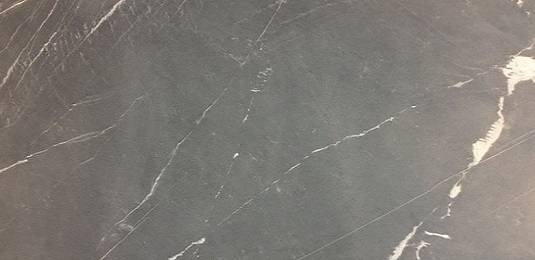 Soap Stone Grey
NOTE: 100% Natural Stone Slate - Images are Indicative and materials subject to availability. Colour and designs may differ by batch
Resistance & Durability of Slate Surfaces
Resistances should be considered carefully for slate working surfaces to ensure it is appropriate material to suit the purpose intended.
Despite the clean, solid and matt tones of slates, it is a relatively soft material compared to its natural and engineered alternatives as a worktop surface options.
Maintaining Working Surface
Although slate has high heat and thermal resistance, long exposure to hot or cold temperatures may cause the slate to delaminate (divide into layers). Calcified hard water deposits may appear under pots or items that have prolonged contact with the slate worktop surfaces... sealing is strongly advised. Marks do appear easily on some slate worktops. Most scratches can be buffed out with mineral oil or a stain pen. Although we seal the slate work surface prior to installation it is advised that your working surface should be sealed twice Yearly.
Worktop Care
After your natural slate kitchen surfaces or products are installed, its up to you to keep your slate worktops in excellent condition. The simplest way to go about caring for your slate worktop is to use trivets for hot pans, chopping boards for cutting, and wipe away spills and chemicals promptly with warm soapy water. Naturally resistant slate Worktops will last a lifetime given the natural care that was intended!
What Is Slate?
Slate is a fine grained rock type, and is composed mostly from a fine clay, mud and shale, and in some cases may include sand and volcanic ash / dust.
Composition and Foliation
Due to sheering forces and / or differential pressure during its formation, it will form in layers of varying thicknesses as thin as paper, or over metre thick. As can be seen most often in driveway slate, or roofing tiles, and in some cases of severe weathering or wear, layers can delaminate. This distinct layering called 'foliation' is not unique to slate. Foliation can happen to many kinds of metamorphic rock, however, in slate, delamination is most effective due to it clay content. Slate can therefore be re-termed as a fine grained foliated rock, in fact, the finest grained foliated rock of all.
Processes, Transformations & Minerals
Fine grained foliated rock slate is formed in lower temperatures and varying pressures than other metamorphic rocks such as limestone and marble. As temperatures of both the metamorphic and crystallisation processes are lower in slate, the extended time period allows differential stresses to allow foliation to form. Slates initial state prior to metamorphic transformation is of sedimentary origin, in the form of mudstone. Slate, like any other rock can also be subjected to further metamorphism and crystallization creating different appearances such as quartz veining.
Rock types dervied from slate through metamorphism include phyllite, schist, and gneiss. The longer time period the fine grained rock is exposed to metamorphism (high-grade metamorphism), the more coarse grained the metamorphic rock is. however, the minerals and grains that undergo, or that are introduced during metamorphism differ. As a metamorphic rock, slates mineral composition is mainly of; quartz, muscovite / illite and chlorite (approximately 95% of its composition). Minerals that contribute to slates dark colouration can include iron oxides hematite and magnetite, iron sulfates (Pyrite most prominently) and carnonate minerals.