Quartz Surface Guide
What Is
Engineered Quartz?
Engineered quartz is a man-made stone surface made from natural quartz minerals, binders and pigments under controlled factory conditions.
This guide explains what engineered quartz is, how it is made, and why it is widely used for kitchen worktops and other interior surfaces. On this page we shall also outlines how engineered quartz differs from natural stone materials and why it is commonly used for engineered quartz worktops in kitchens and other interior applications.
To understand how it compares with other materials, see our best kitchen worktop guide.
Visit quartz worktops, discover colours and advantages.
Last updated: 26 March 2026
Primary Ingredients of Engineered Quartz
The primary ingredient in engineered quartz is naturally occurring crystalline mineral 'quartz' which consistutes approximatey 85-94%.
As engineered quartz is designed to deliver consistent performance and appearance, it has become one of the most widely used surfaces in modern interiors. These strengths are due to the mineral content and processes involved in its production. The manufacturing process allows greater consistency in colour, pattern and physical properties, while retaining natural stone characteristics, such as durability and hardness.
In practical terms, engineered quartz sits between natural stone and fully synthetic surfaces. It is designed to meet the day-to-day demands of kitchens and interior spaces, offering predictable behaviour, low maintenance requirements and a wide range of design options. While it is used in many interior applications, it is best known for its use as quartz kitchen worktop surfaces.
Natural Stone Processing
Often combined with refined stone aggregates recycled from granite and marble processing. Natural stone quarries in respect of this engineered stone surface perspective are for:
The natural stone that is mined in quarries is cut from the source rock to set specifications is called 'dimension stone' and heavily used in construction and stonemasonry. The cut blocks are graded in terms of quality, and are classified into three categories: Premium, Standard and Commercial. Remnants from cutting blocks out of the source rock, or low quality natural stone not suitable for sale in its solid form are refined into a mixture of crystalline mineral grains.
Naturally Occurring Crystalline Mineral Grains
Naturally forming cystalline grains are those that had previously formed within the stone before being refined into a mixture. during engineered stone manufacture and under the right conditions, these minerals will reform and expand creating a denser crystalline structure.
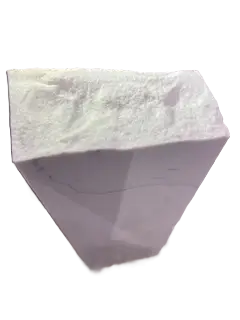
Engineered Quartz Binders and Fillers
Engineered quartz is typically made from 84-94% quartz content and 6-15% polymeric or cement based binders & pigments that hold the material together and provide colour.
The binding agent is crucial for long term durability, it also is a major contributer in making quartz worktops a non-porous surface that is resistant to scratches and stains.
The crystalline mineral mixture, depending on slab design is mixed with dyes and a resin polymer binder along with any fillers (such as mirror chips, sparkle elements and, stone fragments) to make a final 'engineered quartz mixture'. The 6–15% polymeric or cement-based binders are used in the manufacture of engineered quartz surfaces, the mixture also includes the following fillers:
- Ceramic
- Glass
- Mirrors
- Dies
The final mix is set down in trays according to 12mm, 20mm or 30mm thickness with veined design dyes added either through layering, injected or surface sprayed.
How Engineered Quartz Is Manufactured
The manufacturing of engineered quartz slabs involve several essential production processes.
The Bretonstone processes work in tandem with one another to produce the many colours and designs that are available to today. Batches are essential for continuity in production ensuring consistency in colour, design and texture.
Manufacture of engineered quartz is always performed in batches. Each batch has four processes that prepares, bakes and calibrates the crystalline mineral mixture / engineered stone slab.
Bretonstone Vibro-Compression
PREPARE
The quartz based composite mixture is rigorously vibrated and compressed during a process termed 'vibro-compression', which puts the slab under a vacuum exerting extreme pressure removing all the air. Vibro-compression is a patented technology 'Bretonstone System', invented in the early 1970s by Breton founder Marcello Toncelli. Most engineered quartz manufactures use this perfected Bretonstone system.
Kiln Recrystallisation
BAKE
The vibro-compressed engineered quartz mix transferred to a kiln and exposed to very high temperatures. High temperatures are required to replicate the natural process of recrystallisation, in which the quartz grains and minerals in the mixture deform and grow through nucleation. This growth and nucleation is what creates the strong and consistent bond that quartz materials are best known for.
Slab Calibration
CALIBRATE
The slab is allowed to cool, and then calibrated according to its thickness and size of either a set standard or giant slab dimension. The slab surface is highly polished or polished and brushed to a set surface texture before any coatings are added and labelled to fulfill orders to wholesale material suppliers or fabricators like Master of granite and marble.
Processing Technology Behind Engineered Quartz
How and when the Breton company developed the technology to produce engineered quartz.

The technology to create engineered quartz was first developed in 1963 by the Breton company in northeast Italy. The processing technology was licensed under the trademark Bretonstone. Machinery became large enough to produce slabs measuring approximately 50 inches (1.27 metres) in length by the mid-1970s. However, early productions lacked colour and pattern variations.
Only recently, as processing technology has advanced, that large scale slabs and popular colours, veins and surface finishes can be manufactured. The evolution of engineered quartz work surfaces continues to see a dramatic increase in variety; with a multitude of manufacturers, suppliers, and fabricators.
Looking After Engineered Quartz Surfaces
Despite the strong all-round resistance of quartz, protecting quartz surfaces is relatively simple, if correct care is taken.
Engineered Quartz FAQs
Quick answers to common questions.
How long does engineered quartz last?
When properly fabricated, installed, and maintained, engineered quartz surfaces can last for decades. Longevity depends on usage conditions, installation quality, and adherence to care recommendations.
Does engineered quartz require sealing?
No. Engineered quartz surfaces are non-porous and do not require sealing. Routine cleaning with mild detergents is generally sufficient to maintain the surface.
How does engineered quartz differ from natural stone?
Unlike natural stone, which varies from slab to slab, engineered quartz is manufactured to achieve consistent colour, pattern, and performance. Natural stone forms through geological processes, whereas engineered quartz is produced using industrial technology.
Is engineered quartz suitable for kitchen worktops?
Yes. Engineered quartz is widely used for kitchen worktops due to its durability, low maintenance requirements, and consistent appearance. Its resistance to staining and scratching makes it well suited to everyday kitchen use. Learn more about engineered quartz worktops and how they perform in kitchen environments.
How much natural quartz is in engineered quartz?
Most engineered quartz surfaces contain approximately 85–94% natural quartz minerals. The remaining percentage consists of polymer or cement-based binders, pigments, and optional decorative fillers such as glass or mirror fragments.
Is engineered quartz a natural stone?
No. Engineered quartz is a man-made stone surface composed primarily of natural quartz minerals combined with binders and pigments. While it contains a high percentage of natural material, it is manufactured under controlled conditions rather than quarried as a solid block.
Contact a quartz worktop professional for a free