Stone Surface Guide
What Is the
Best Kitchen Worktop?
Quartz is widely considered the best all-round kitchen worktop — combining durability, low maintenance, and consistent appearance.
For most kitchens, quartz worktops are considered the best overall choice due to its durability, low maintenance, and consistent appearance.
Visit quartz worktops to learn about quartz and discover colours.
Last updated: 26 March 2026
How to Choose the Best Kitchen Worktop
With so many stone kitchen surface materials, which stone worktop is best for your intended purpose?
The best kitchen worktop depends on durability, maintenance, appearance, and budget. While no single material is perfect for every home, Quartz worktops are widely considered the best all-round kitchen worktop for most kitchens due to its strength, low maintenance, resistance to staining and scratching, and consistent appearance.
Key Deciding Factors
Natural stone worktops such as granite, marble, and quartzite offer unique character and long-term durability but require more care, while porcelain provides excellent heat resistance and a modern aesthetic. Choosing the right material is best done by comparing practical factors such as cost, strength, and everyday performance, rather than trends alone.
Best Kitchen Worktop by Use Case
- Best for families: Quartz
- Best for cooking & heat: Porcelain
- Best for natural look: Granite
- Best for luxury kitchens: Quartzite
- Best for baking: Marble
This guide compares the most popular kitchen worktop materials based on real-world performance, helping you decide which option offers the best balance of durability, value, and long-term satisfaction for your home. As stone fabricators, we assess materials not only on appearance, but also on how they perform during fabrication, installation, and daily use.
For homeowners looking for the best kitchen worktop, materials such as quartz worktops and granite worktops remain among the most popular choices due to their durability and appearance. quartz worktops, granite worktops, porcelain worktops, and quartzite worktops
| Material | Durability | Maintenance | Best For |
|---|---|---|---|
| Quartz | Very High | Low | Busy kitchens, low maintenance |
| Granite | High | Medium (sealing) | Natural stone appearance |
| Quartzite | Very High | Medium (sealing) | Luxury kitchens, durability |
| Marble | Medium | High | Statement kitchens, baking |
| Porcelain | Very High | Very Low | Heat resistance, modern kitchens |

Stone Types & Maintenance Differences
Maintenance differences are an important consideration when choosing the best stone worktop for kitchens, utility rooms, and bathrooms.
When the term “maintenance-free” is used in relation to quartz and porcelain worktops, it refers to the level of care required to maintain the surface. The amount of maintenance needed depends on each stone type’s resistance properties.
Maintenance Requirements
All engineered stone (also known as man-made stone) surfaces require low maintenance because the binders used in their manufacture make them effectively waterproof. Natural stone surfaces, however, require more attention to help maintain water resistance. A surface’s water resistance (porosity) can affect other properties, especially stain resistance. Compared to granite, quartz requires less maintenance and does not need sealing. Compared to porcelain, it offers easier fabrication and repair. While quartzite is harder, it comes at a significantly higher cost and requires more care.
Natural stone examples: Porous surfaces — Sealing required e.g.
- Marble
- Limestone
- Granite
- Quartzite
- Slate
Man-made stone examples: Non-porous surfaces — No sealing required e.g.
- Quartz
- Porcelain
- Ecotone
We seal natural stone surfaces prior to delivery or installation. In general, best practice is to seal all natural stone surfaces at least twice yearly to maintain maximum protection.
Why Maintenance Differs
Engineered stone surfaces benefit from resin binders that reduce porosity, while natural stone forms over time through geological processes, resulting in varying absorption levels. Understanding these differences helps ensure long-term performance and appearance.
Regular Sealing and How to Do It:
Ideally, all natural stone worktops should be sealed twice yearly for maximum protection. There are exceptions; however, the twice-yearly rule is best for simplicity. Sealing is straightforward and typically involves applying a stone-safe sealer to a clean, dry surface and allowing it to penetrate before wiping away excess.
The sealer container will include clear application instructions — be sure to note the cautions and timings specific to the product purchased.
Do all natural stone worktops need sealing?
Most natural stone worktops require sealing to reduce porosity and protect against staining, although sealing frequency can vary depending on stone type and usage.
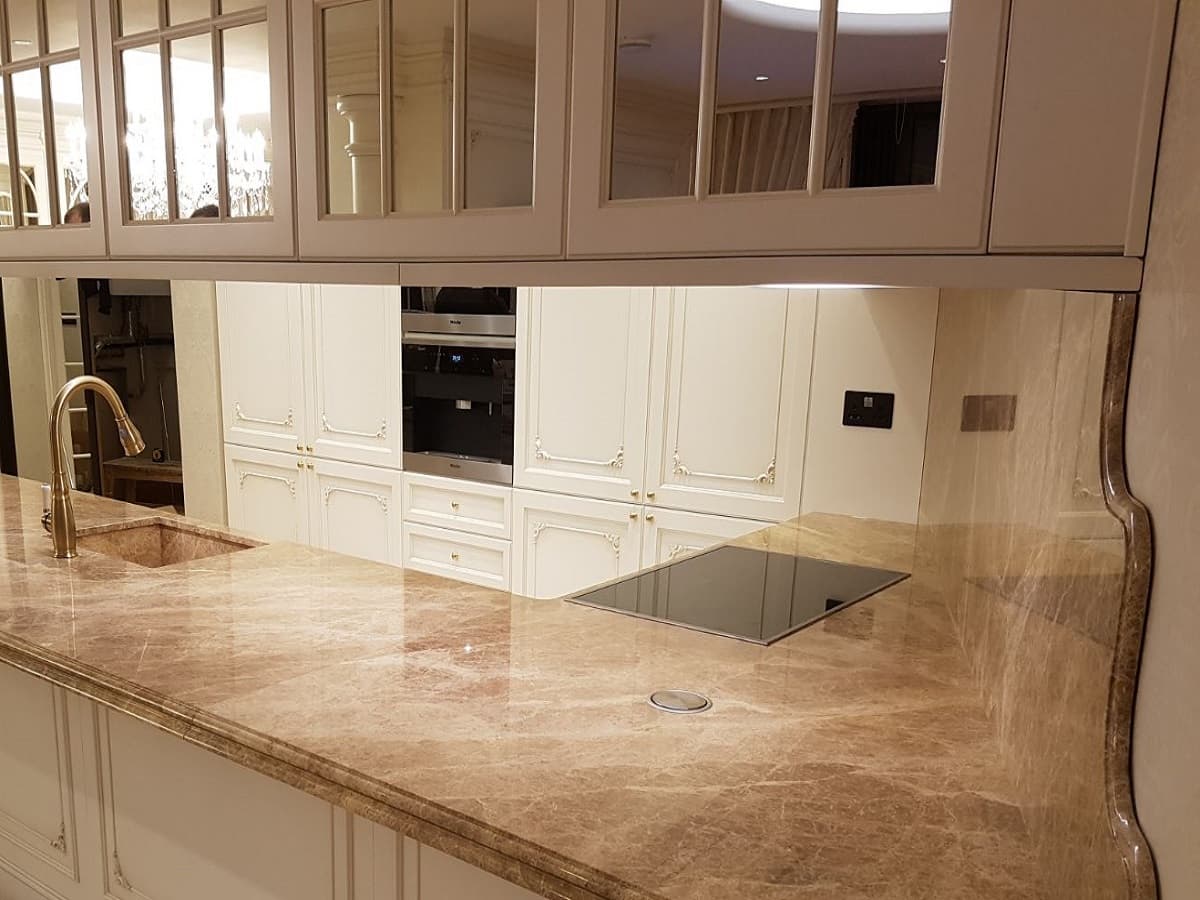
Stone Strengths
The best kitchen worktop should resist scratching, chipping and everyday wear — but no material is completely damage-proof.
The hardness of a worktop directly influences its resistance to scratching and chipping. If a stone surface is manufactured, installed, and used correctly, cracking should not usually be a concern. Each type of stone surface has a different hardness level, depending on the minerals it contains.
engineered stone worktops differ from natural stone in that they are reconstituted from natural stone minerals combined with additives known as binders. These binders give the stone a degree of flexibility, despite typically making up only 7–15% of the material. This flexibility allows man-made stone to be worked and handled in slightly different ways compared to natural stone.
When durability is the priority, porcelain worktops and quartz worktops are considered some of the most scratch-resistant and low maintenance kitchen worktops available.
Mineral Hardness
The Mohs Mineral Hardness Scale, which rates minerals from 0 (softest) to 10 (hardest), is commonly used to approximate worktop hardness. Because kitchen worktop surfaces are composed of multiple minerals, the values shown are approximate.
Mohs Hardness Ratings by Material:
For comparison, steel has a hardness rating of 4 on the Mohs scale.
Mohs Hardness ScaleHow Hard Does A Worktop Need To Be?
Ideally, worktops should resist everyday wear and tear, but no surface is totally impervious to damage. Stone is hard but can be brittle — sudden impact, heavy knocks, or forceful cutting can damage even the toughest materials. The misconception that any stone surface is completely resistant is unrealistic. Kitchen utensils such as chopping boards and trivets are designed to protect the worktop surface from daily wear and tear.
Material Flexibility
Engineered stone quartz generally offers greater flexibility during fabrication compared to porcelain and natural stone.
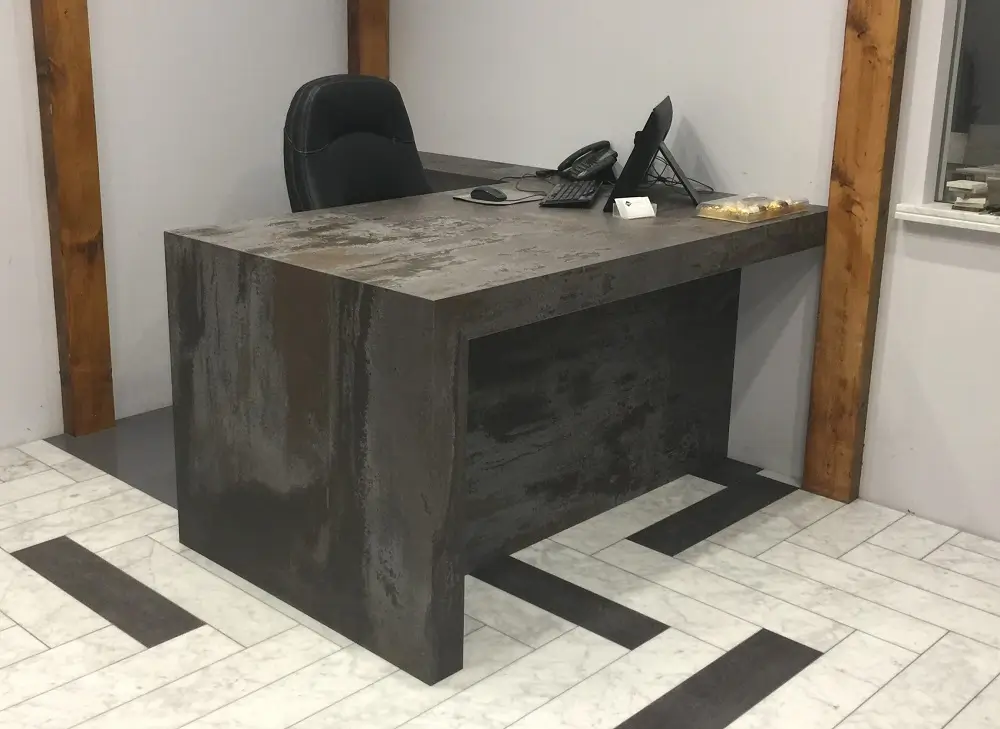
What Is the Best Kitchen Worktop?
The best kitchen worktop depends on how you use your kitchen, your budget, and how much maintenance you are willing to accept.
By understanding the differences between materials, you can confidently choose a kitchen worktop that looks great, performs well, and suits your lifestyle for years to come. For most kitchens, quartz worktops provide the best all-round solution, combining durability, low maintenance, and excellent value compared to natural stone alternatives.
- Best overall worktop:
Quartz — durable, low maintenance, and consistent in appearance. - Best low maintenance worktop:
Porcelain or quartz — non-porous and highly resistant. - Best natural stone worktop:
Granite or quartzite — strong, long-lasting, and unique. - Best luxury worktop:
Quartzite or marble — premium appearance with careful care. - Best value for money:
Standard-grade engineered quartz.
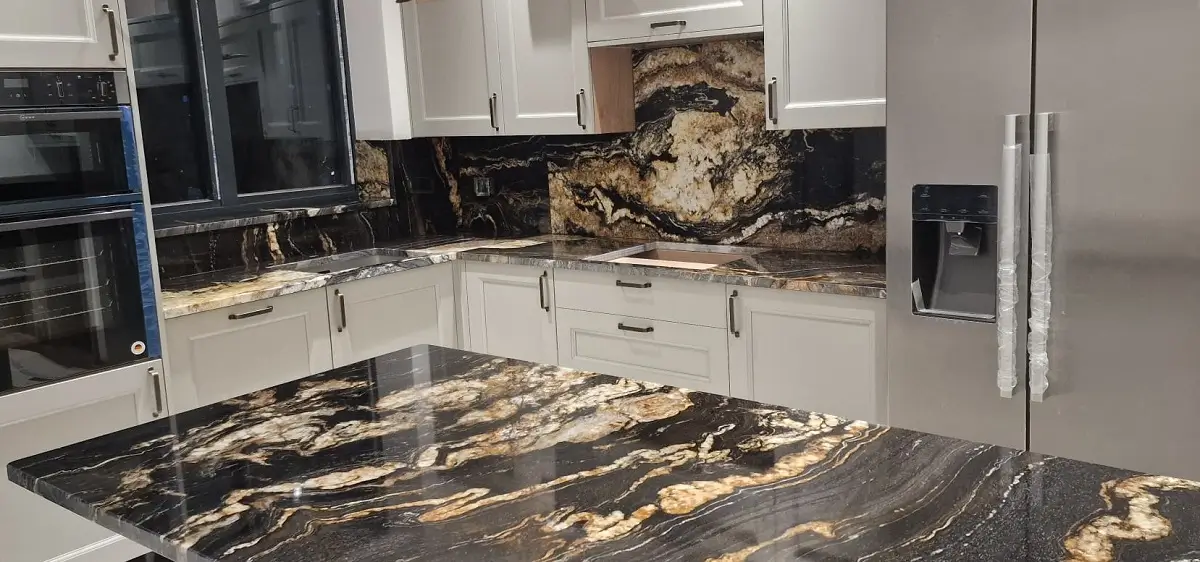
Stone Costs
Stone costs can vary substantially and depend on how exotic a material is as well as its grade, colour, design and slab size
Each natural stone material type has its own pricing classification and is further divided into grades. The costs provided are indicative and intended to give a general overview only. The choice between grades, slab delivery and thickness can have a significant impact on the overall cost of a worktop or stone product.
Worktop costs are based on slab usage rather than exact square metre pricing, which is why real-world prices can vary significantly.
Premium Grade and Exotic Stones
The highest classification stone slabs are premium-grade or exotic materials. These are selected for their vibrancy of colour, consistency of veining, and, most importantly, structural soundness. Premium-grade slabs are the most expensive, with costs averaging £350 + VAT per square metre (approximately £2,100 + VAT per full natural stone slab).
Standard Grade Materials
The most commonly used natural stone materials for worktops and stone products are standard grade. These slabs may feature slight natural imperfections in colour, veining distribution, and the occasional blemish, while maintaining sound structural integrity.
As standard grade slabs offer a balance between premium and commercial grades, expected costs average £250 + VAT per square metre (approximately £1,500 + VAT per full natural stone slab).
Commercial Graded Slabs
Typically used in large-scale developments, commercial-grade slabs contain more visible natural imperfections such as fissures, colour variation, and veining inconsistencies. Some materials may be filled in areas of pits, holes, or open fissures to ensure structural soundness.
Costs for commercial-grade slabs can be approximated at £150 + VAT per square metre (approximately £900 + VAT per slab).
Man-Made Materials (Engineered Stone)
Similarly, man-made stone materials (engineered stone) are graded in a comparable way to natural stone; however, the reasons for grading differ due to manufacturing processes.
Engineered stone materials such as quartz, porcelain, and silica-free Ecotone vary in cost depending on manufacturing techniques. For averaging purposes, the price differences are relatively small, as slab designs are divided into six pricing groups per material type.
As standard, all engineered materials are classified as A-Grade (Premium Grade) unless known manufacturing discrepancies downgrade the stone to B-Grade. These discrepancies may include blemishes, scratches, or pitting.
For A-grade quartz and porcelain slabs, costs typically range from £500 + VAT per slab to £2,000 + VAT, depending on the pricing group. For A-grade Ecotone slabs, costs are approximately £1,200 + VAT per slab.
Per Square Metre Pricing
Costs provided per square metre for worktops in an average-sized kitchen, or for any stone product, should be treated with caution. While fabricators are charged per square metre by stone suppliers, materials are only purchased in slab form, with slab sizes typically ranging from 3 to 6 square metres, depending on the material type. Per square metre pricing should therefore be used for estimation purposes only, particularly for projects requiring large quantities of stone across multiple slabs.
Manufacturers & Suppliers
There can be substantial cost differences between stone manufacturers and suppliers offering similar slab designs. Man-made stone manufacturers selling their own branded materials generally command higher prices compared to stone suppliers that distribute both branded and unbranded materials. The latter often provides the most competitive pricing, particularly for Chinese quartz materials.
Demand
Demand plays a significant role in the availability and cost of stone materials in the UK. Prices have increased in recent years, partly due to transportation costs. As a result, fewer quantities of both natural and engineered stone are held in stock. Trends also influence pricing; for example, natural quartzite has seen increased demand in recent years, leading to higher costs. Despite lower UK stock levels, natural stone slabs can usually be ordered without additional material cost, although a lead time of 4–6 weeks should be expected.
Bespoke Fabrication
The cost of fabricating stone worktops can be complex, as many variables are involved. The following is a general summary to provide an indication of expected costs. Fabrication involves precision cutting, CNC machining, and hand-finishing, with costs varying depending on material hardness and design complexity. Standard fabrication includes sink and hob cut-outs. Additional elements such as upstands, splashbacks, and windowsills, sink type, flush-fit hobs and the number of joins required will increase costs, particularly if multiple additions are required. Kitchens with square, well-aligned base units typically result in lower fabrication costs.
- Template / measuring service: approximately £150 + VAT, depending on proximity to Harlow, Essex
- Installation: approximately £350 + VAT, subject to location, access, and site conditions
Fabrication Cost Guide (Labour Only)
- Up to 3 metres (kitchen or utility): approx £500 + VAT
- 1-slab kitchens (up to 6 metres): approx £1,100–£1,500 + VAT
- 2-slab kitchens (up to 12 metres): approx £1,400–£1,800 + VAT
- 3-slab kitchens (up to 18 metres): approx £1,700–£2,100 + VAT
Fabrication costs shown are a guide only. Lower-end pricing applies to engineered quartz and Ecotone, while higher-end pricing reflects the additional labour required for harder materials such as quartzite and porcelain. Prices exclude stone material, templating, installation, and any additional features. Final costs are assessed on a project-by-project basis following measurements or a site visit. From a cost perspective, engineered stone worktops often offer the best balance between durability and price, while premium materials such as quartzite worktops, often chosen for luxury kitchens, sit at the higher end of the market.
For an accurate price, request a free worktop quote based on your kitchen layout.
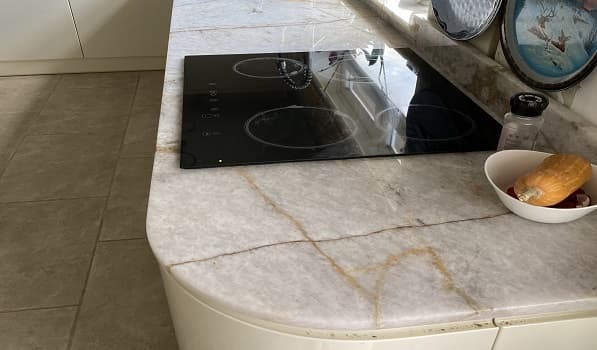
Best Kitchen Worktop FAQs
Quick answers to common questions on pricing, installation and care.
Which kitchen worktop offers the best value for money?
Engineered quartz offers excellent value for money, combining durability, appearance, and minimal upkeep at a mid-range cost.
What is the most low maintenance kitchen worktop?
Porcelain and quartz are the most low maintenance kitchen worktops, as they are non-porous and highly resistant to stains, heat, and moisture.
Are quartz worktops better than granite?
Quartz worktops require less maintenance than granite, as they are non-porous and do not need sealing, making them ideal for busy households.
Which kitchen worktop lasts the longest?
Quartzite, porcelain, and granite are among the longest-lasting kitchen worktops when installed and maintained correctly.
What is the best kitchen worktop material?
Quartz is widely regarded as the best kitchen worktop material due to its durability, low maintenance, and suitability for everyday family kitchens.
Contact a quartz worktop professional for a free